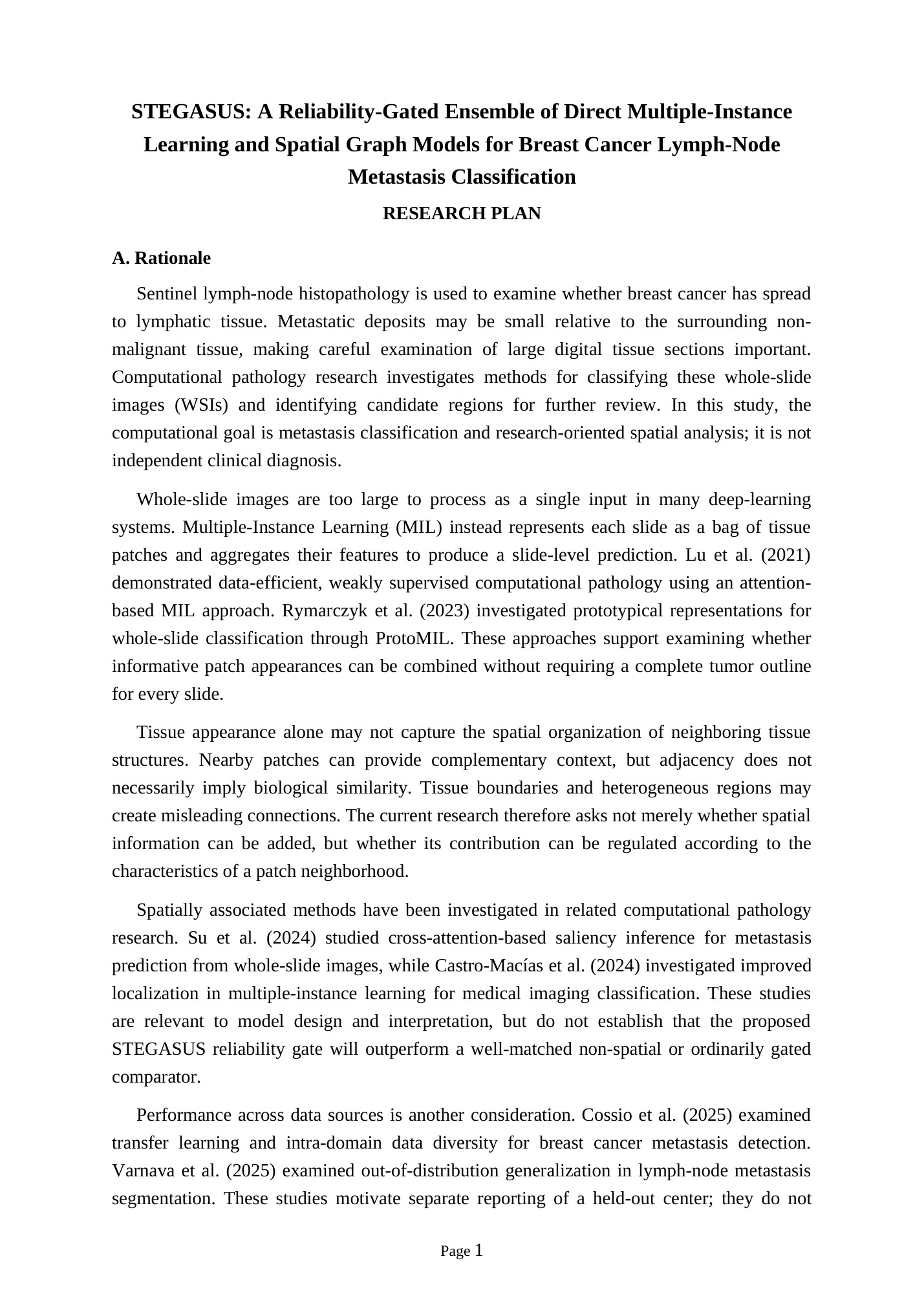
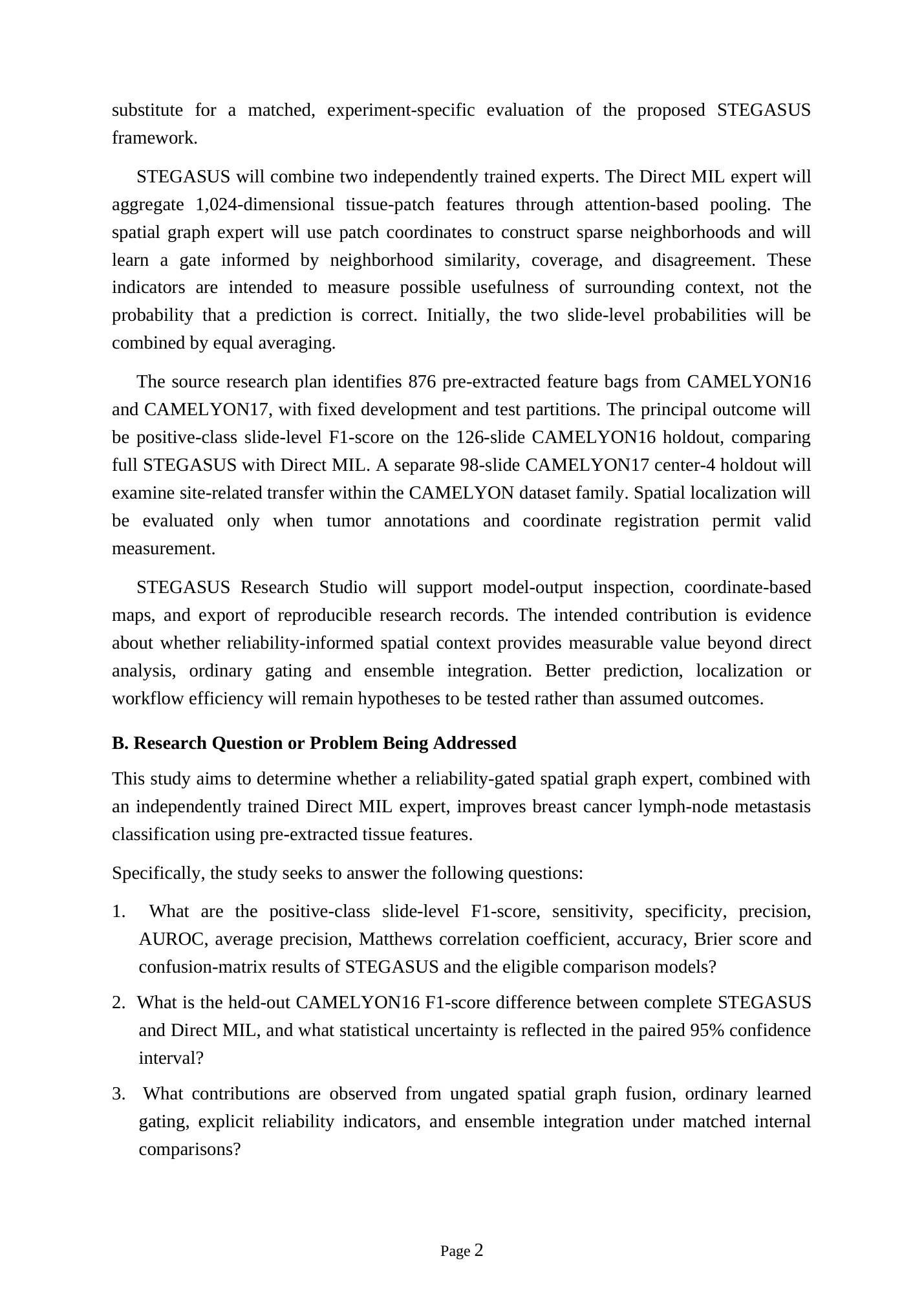
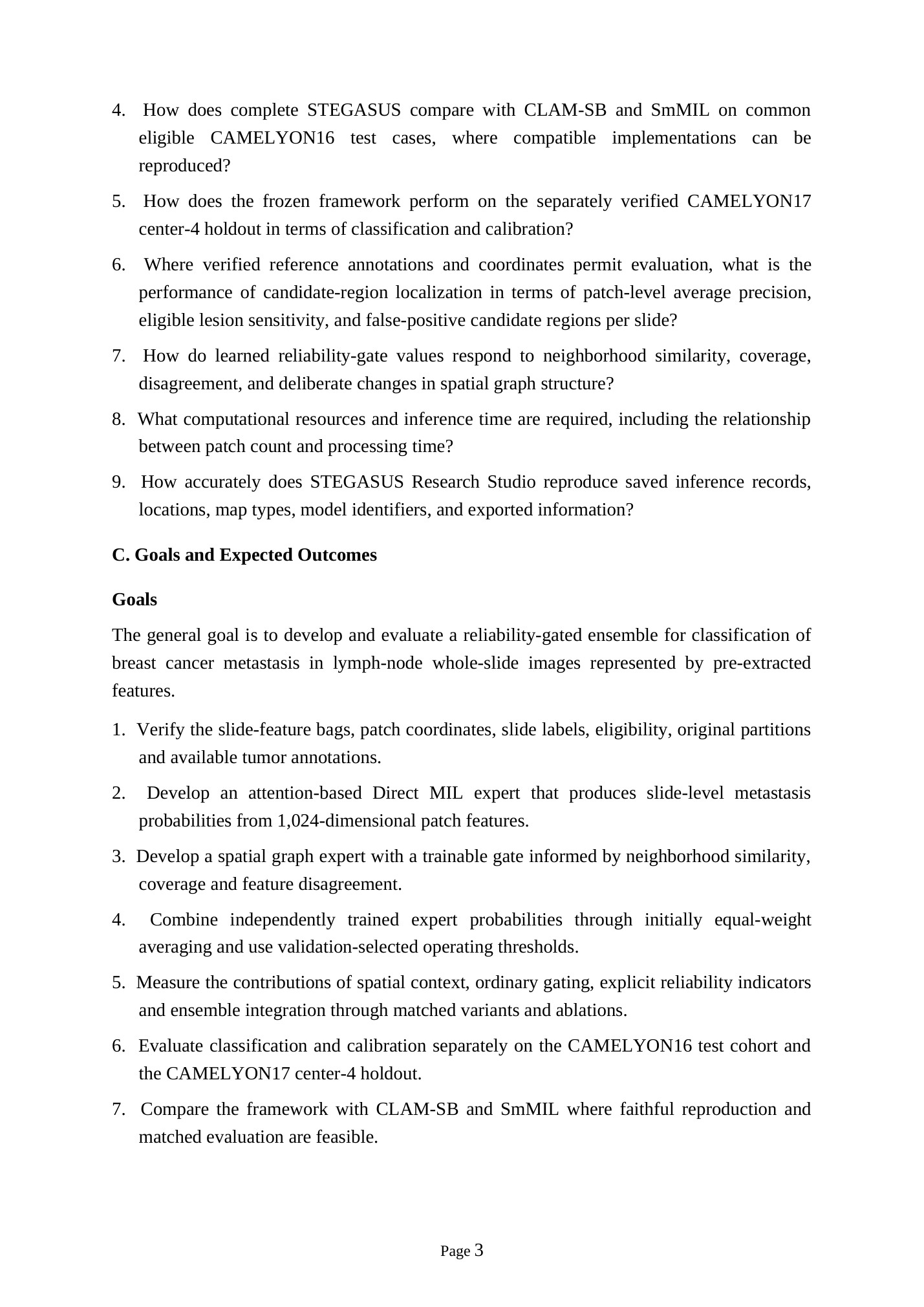
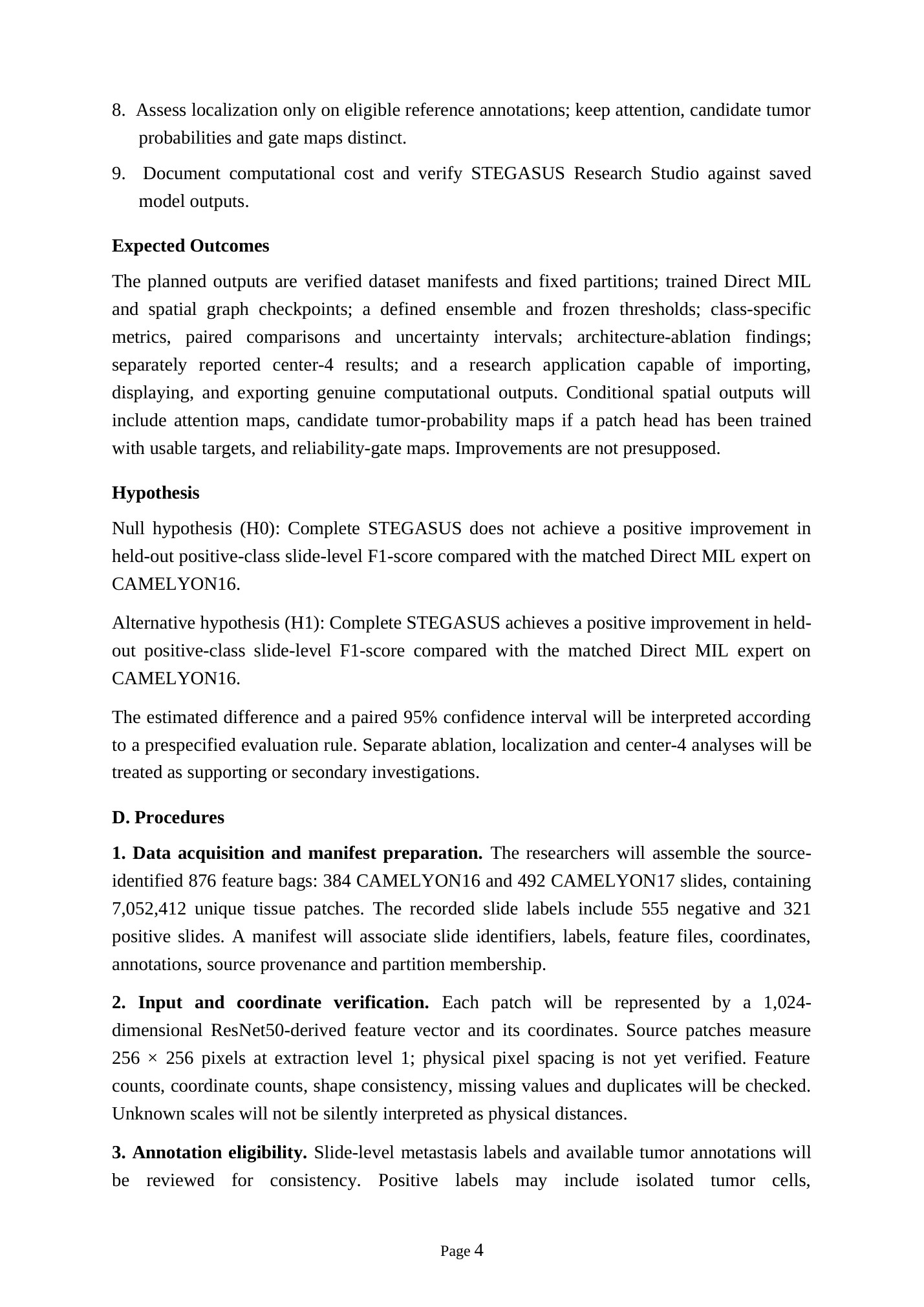
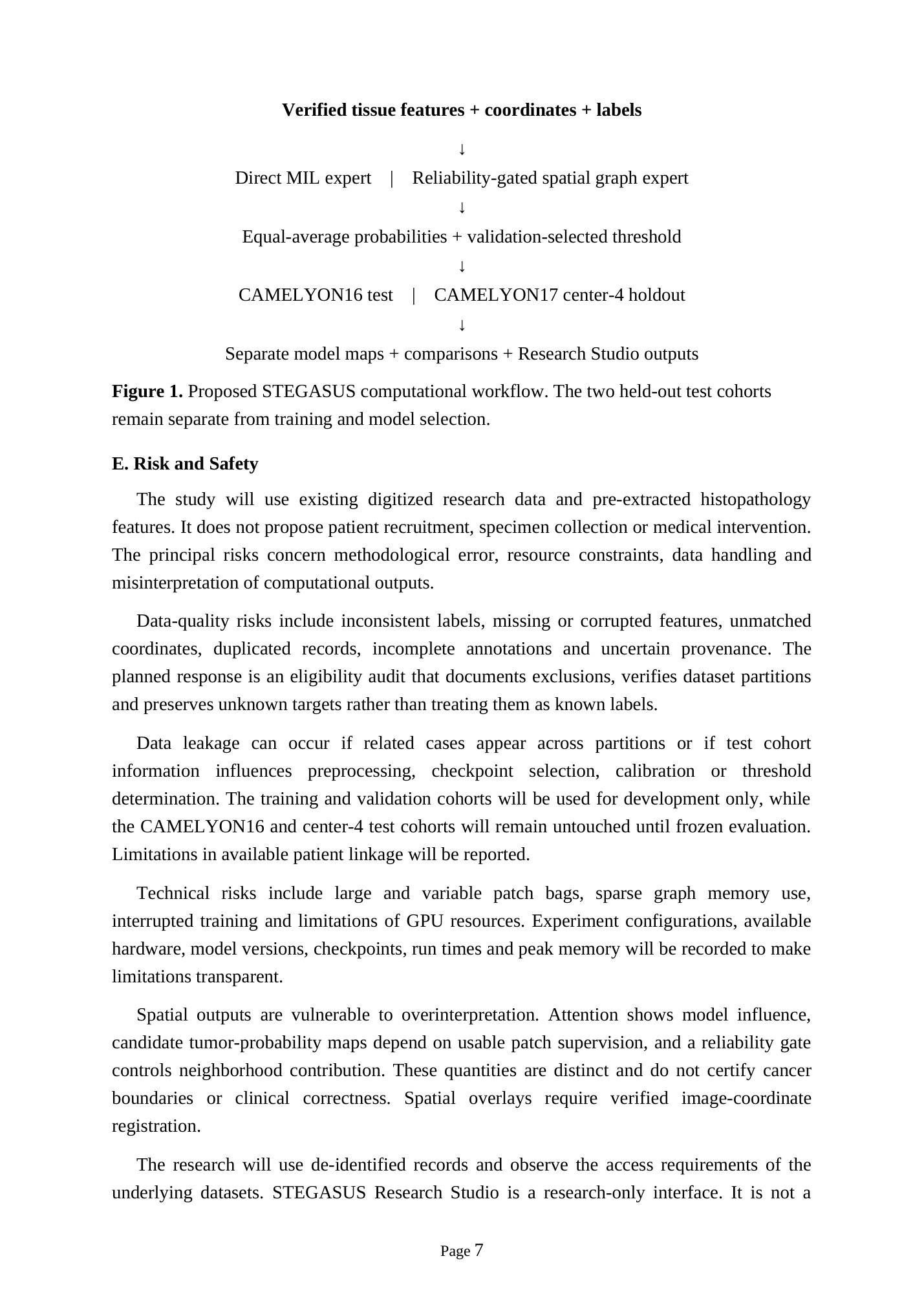
Hello! We’re high school researchers from the Philippines developing STEGASUS, a PyTorch-based framework combining Multiple-Instance Learning (MIL) and a reliability-gated spatial Graph Neural Network (GNN) for breast cancer lymph-node metastasis classification.
Our dataset contains approximately 7 million pre-extracted, 1,024-dimensional tissue-patch features across 876 slides. However, our local hardware is limited to an NVIDIA RTX 3050 and 512 GB of storage.
We’re still refining the model architecture and haven’t completed training. We’d appreciate feedback on how to make the system computationally feasible, particularly regarding efficient graph construction, memory usage, and training strategies for large, variable-sized tissue bags.
We’re also open to constructive criticism of our proposed architecture or suggestions for simplifying it without losing its research objectives.
Any guidance would be greatly appreciated. Thank you!