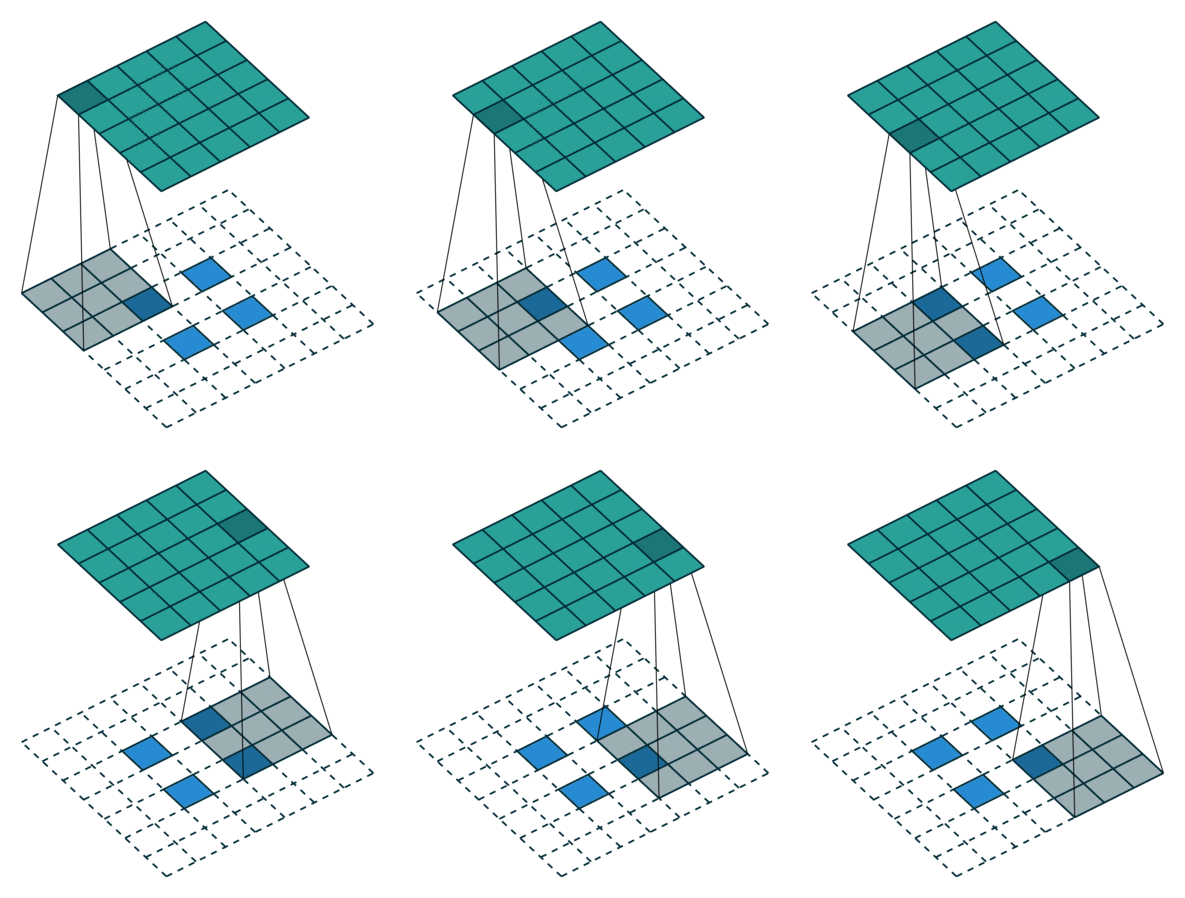
A true deconvolution would be the mathematical inverse of a convolution. The weights of the deconvolution would accept a 1 x 1 x in_channels input, and output a kernel x kernel x out_channels output.
A transposed convolution does not do this. It performs a ordinary convolution with kernel x kernel x in_channels input to 1 x 1 x out_channels output, but with the striding and padding affecting how the input pixels are input to that convolution such that it produces the same shape as though you had performed a true deconvolution.
While the two approaches produce the same output shape, they produce different results and those results are achieved in very different ways.
So for convolution of stride 2, with kernel 3x3, from the input blue to the output green, the convolution would look like this:
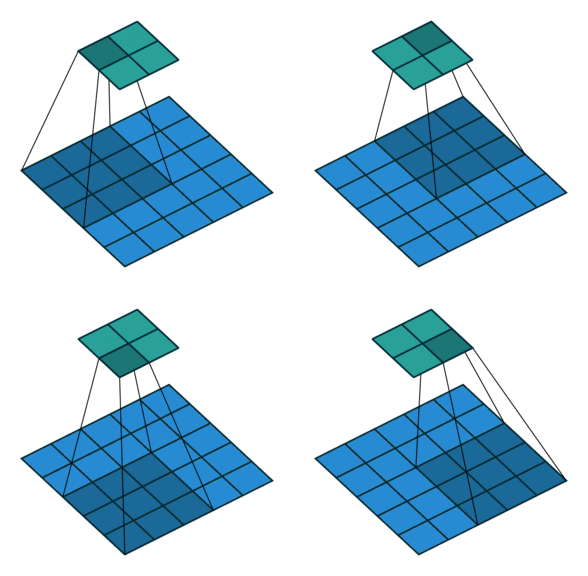
The true deconvolution would be the exact reverse operation. With the green now being the input, and the blue being the output.
In contrast, the analogous transposed convolution (with stride 2 and kernel 3x3) would spread out the input pixels and apply a regular convolution as shown below (with the input being the blue and the output being the green):